Punjab Suspends Challans for Commercial Vehicles After Talks With Transporters
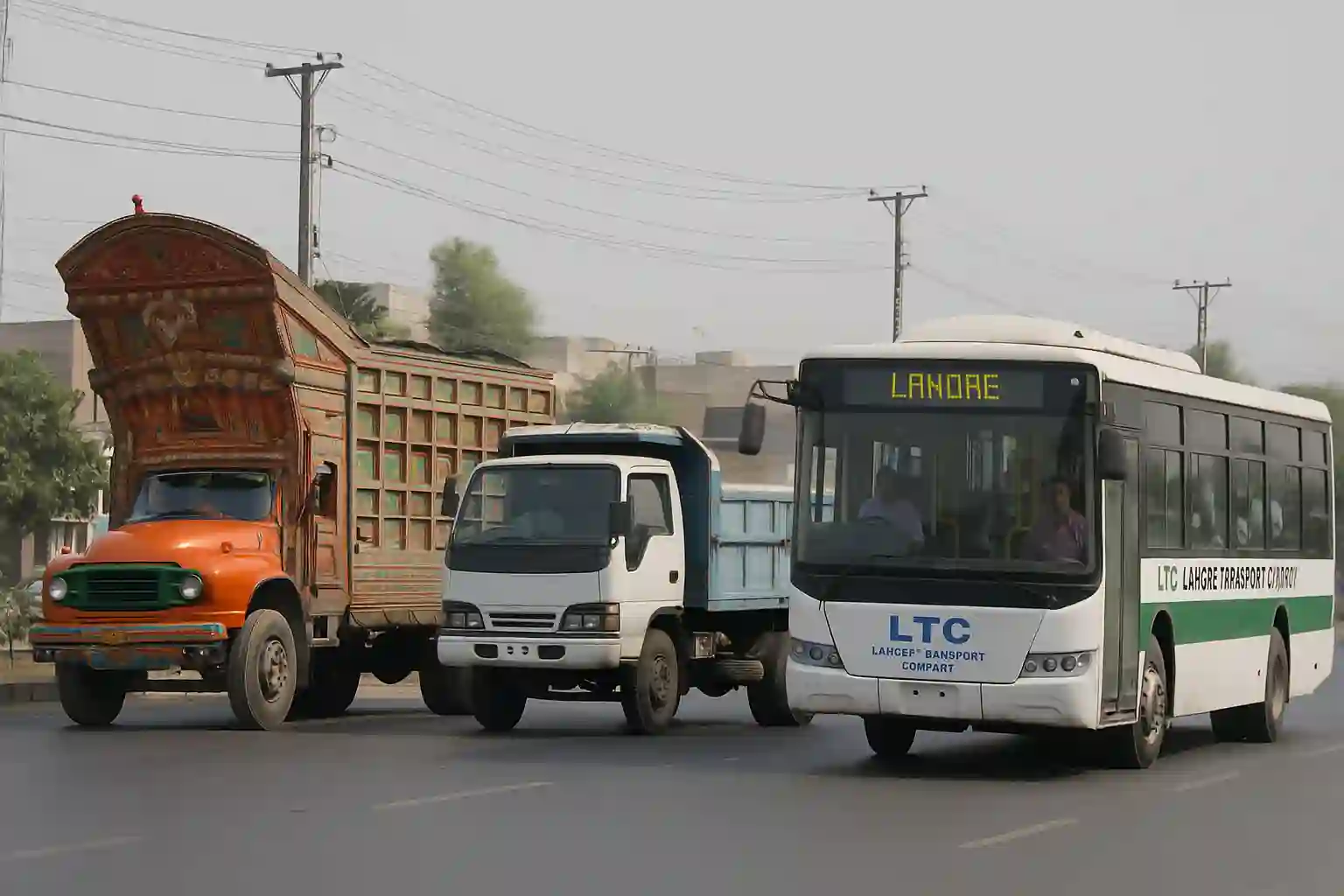
Punjab’s government has temporarily suspended Challans for Commercial Vehicles after successful negotiations with transporters on Monday. The decision came after transporters announced a strike across the province to protest enforcement measures and the newly introduced Traffic Rules 2025. However, the strike remained largely ineffective, with most transport operations continuing as normal.
Officials revealed that only a small number of goods transport vehicles, especially trucks and trailers, were seen off the road during the strike. Passenger transport, intercity routes, and urban services, including e-buses and metro buses, continued operations smoothly in major cities.
Temporary Relief as Committee Formed to Review Concerns
During negotiations, both the transporters and the provincial administration agreed to form a committee that would review all issues raised by the transport community. Until the committee completes its review, Punjab has temporarily suspended challans for commercial vehicles, offering immediate relief to operators who had been protesting the strict enforcement of new regulations.
Transporters had argued that certain rules introduced under the updated Traffic Rules 2025 were impractical and difficult to follow without prior adjustments. The government acknowledged these concerns and agreed to revisit the rules before resuming enforcement.

Punjab Transport Minister Confirms Suspension of Rules
Punjab Transport Minister Bilal Akbar Khan confirmed that the enforcement of Traffic Rules 2025 for commercial vehicles has been officially halted. He stated that the government aims to make the rules more practical while maintaining road safety as a top priority.
According to the minister, the government is committed to working with stakeholders to introduce suitable amendments to the Traffic Rules Ordinance. He emphasized that the province wants regulations that are fair to transporters while ensuring discipline on the roads.
The temporary halt on challans is seen as a confidence-building measure, encouraging transporters to cooperate with the government rather than resort to strikes.

Mixed Signals on Whether Strike Is Fully Called Off
Officials at the General Bus Stand in Gujranwala shared that both sides had agreed to call off the strike after successful negotiations. They added that a formal announcement from transport unions is expected soon, and normal operations will continue across the province.
However, Senior Minister Punjab Marriyum Aurangzeb contradicted these claims, stating that no official decision has been communicated regarding the strike being withdrawn. Her statement has created some confusion, though most transport services remain operational.
Analysts believe that while the strike may not have fully succeeded, the government’s willingness to temporarily suspend challans reflects the pressure from transport associations and the need to maintain smooth public mobility.

Urban and Intercity Transport Operated Without Disruption
Secretary RTA Asad Abbas Shirazi confirmed that transport operations remained largely unaffected despite the strike call. He said that urban routes, including the metro bus service and the provincial e-bus network, continued to operate normally.
He added that all D-class bus stands kept running intercity services, ensuring passengers experienced minimal inconvenience. This continuity was made possible as several transport operators had already informed authorities that they would not participate in the strike.
The RTA submitted a complete report on ongoing urban and intercity transport operations to the provincial government, highlighting the stability of services despite protest attempts.

Government Warns Against Forced Disruption
Secretary Shirazi issued a clear warning that strict legal action would be taken against anyone trying to forcibly stop buses or disrupt transport operations. He emphasized that public safety and convenience will remain the government’s top priority, and no one will be allowed to create chaos on the roads.
He also stressed that pick-and-drop service operators must follow the passenger limits stated in their route permits. Authorities will not tolerate any violation that compromises safety, especially since overcrowding has been a major concern in past incidents.
Transporters’ Concerns and What Comes Next
Transporters have raised concerns regarding the penalties, documentation requirements, and certain enforcement steps included in the Traffic Rules 2025. They argue that compliance requires gradual implementation, technical adjustments, and updated vehicle modifications.
With the formation of a review committee, these issues will now be examined in detail. The committee is expected to include representatives from the transport sector, traffic enforcement bodies, and the provincial transport department.
Once the committee completes its review, the government will finalize amendments to the ordinance and decide when the enforcement—and challans—will resume.
Transporters believe that meaningful engagement and practical revisions will prevent future protests and ensure long-term harmony between regulators and operators.
Public Transport Users Remain Unaffected
One of the most notable outcomes of the situation is that public transport users did not face the difficulties many had expected. Metro buses, e-buses, wagons, rickshaws, and private ride-hailing services continued to operate normally throughout the day.
Passengers traveling intercity also reported no major delays or cancellations. This stability highlighted the limited impact of the strike and the readiness of authorities to keep essential transport services running.
Broader Impact on the Transport Industry
The temporary suspension of challans is likely to reduce tensions for now, but industry experts say the long-term solution depends on how effectively the committee addresses transporters’ concerns. Transport operators are hoping for revised regulations that consider vehicle conditions, costs, and operational challenges.
Meanwhile, the government aims to modernize traffic laws to improve road discipline, reduce accidents, and bring uniformity to commercial transport standards. Balancing these priorities will be a significant challenge in the coming weeks.
Conclusion – Punjab Suspends Challans for Commercial Vehicles
Punjab’s decision to suspend challans for commercial vehicles marks a significant development after negotiations with transporters. While the strike did not disrupt major transport operations, it prompted the government to pause enforcement of the Traffic Rules 2025 and initiate a review through a dedicated committee.
With urban and intercity transport remaining stable, passengers did not face inconvenience, and authorities continued operations smoothly. The coming weeks will determine how the government updates the ordinance and how transporters respond to the revised regulations.
For now, the temporary suspension provides relief to transporters and opens the door for constructive dialogue between the government and the transport community.