Racist Video Controversy: Trump Says ‘I Didn’t Make a Mistake’
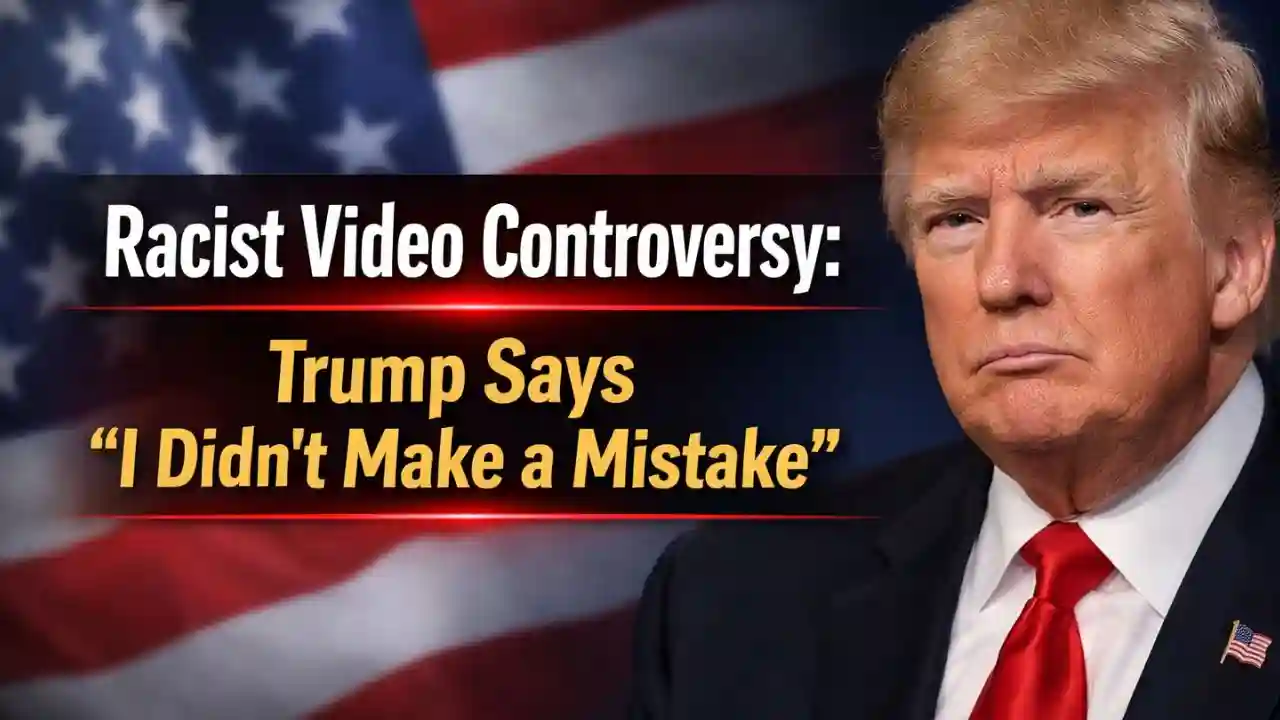
The Racist Video Controversy has sparked fresh debate across the United States and beyond. Former US President Donald Trump once again found himself at the center of criticism after a controversial video resurfaced, followed by his bold response: “I didn’t make a mistake.”
The statement has intensified discussions about racism, accountability, political polarization, and leadership standards in modern American politics. Supporters argue Trump is being unfairly targeted, while critics say his words reveal a deeper issue that cannot be ignored.
What Is the Racist Video Controversy About?
The controversy began after a video clip circulated widely on social media platforms. In the video, Trump appears to make remarks that many viewers described as racially insensitive and offensive. Although the video itself was not new, its resurfacing came at a politically sensitive time, amplifying its impact.
Civil rights groups, political opponents, and social media users quickly condemned the remarks, labeling them as racist rhetoric that reinforces harmful stereotypes.
Trump’s response, however, shocked many critics.
Trump’s Response: “I Didn’t Make a Mistake”
Instead of issuing an apology, Trump firmly stated:
“I didn’t make a mistake.”
This response became the most controversial part of the incident. Critics expected clarification or regret, but Trump doubled down, claiming his words were taken out of context and deliberately distorted by political rivals and the media.
Supporters praised his stance as confidence and honesty, while opponents viewed it as refusal to take responsibility.
Why This Statement Triggered More Backlash
Trump’s refusal to acknowledge wrongdoing fueled further outrage for several reasons:
- It dismissed concerns raised by minority communities
- It ignored historical sensitivities around racial language
- It reinforced perceptions of divisive leadership
- It escalated political tensions rather than calming them
Many analysts believe the reaction would have been less severe if Trump had shown even limited acknowledgment of public concern.
Public Reaction Across the United States
Social Media Backlash
On platforms like X (formerly Twitter), hashtags related to the controversy trended for hours. Users shared clips, reactions, and opinion threads debating whether the remarks crossed a line.
Some posts accused Trump of normalizing racism, while others defended him by arguing free speech protections.
Response From Civil Rights Organizations
Several civil rights groups released statements condemning both the video and Trump’s refusal to apologize. They argued that such rhetoric from influential leaders can:
- Encourage discrimination
- Deepen social divisions
- Undermine efforts toward equality

Political Reactions From Democrats and Republicans
Democratic Party Reaction
Democratic leaders criticized Trump’s comments as dangerous and irresponsible, stating that a national leader must show empathy and accountability.
Some Democrats also used the controversy to emphasize their campaign messaging around unity, diversity, and inclusion.
Republican Party Reaction
Reactions within the Republican Party were mixed:
- Some leaders avoided commenting altogether
- Others defended Trump, saying media outlets were exaggerating
- A few expressed concern privately about electoral consequences
This division highlights ongoing tensions within conservative politics regarding Trump’s influence.
Media Coverage and the Role of Context
News organizations played a major role in shaping the narrative. Supportive outlets argued the video lacked proper context, while critical media emphasized the impact of words, regardless of intent.
This contrast once again exposed the deep media polarization in the US, where audiences often consume entirely different versions of the same event.
Impact on Trump’s Political Image
The controversy may have long-term effects on Trump’s political standing:
Among Supporters
- Reinforces his image as someone who “doesn’t back down”
- Strengthens loyalty among core voters
Among Swing Voters
- Raises concerns about leadership tone
- May alienate moderate and independent voters
Political analysts say such controversies can energize a base while simultaneously limiting broader appeal.
Why Racist Video Controversies Matter in Politics
Incidents like this are not just about one video or one statement. They reflect larger issues such as:
- Accountability in leadership
- The influence of political language
- The responsibility of public figures
- Social cohesion in diverse societies
Words from leaders carry weight, especially in countries struggling with racial and cultural tensions.
Trump’s Pattern of Defiant Responses
This is not the first time Trump has responded to criticism with defiance rather than apology. Throughout his political career, he has often:
- Rejected media narratives
- Accused opponents of bad faith
- Framed controversies as political attacks
Supporters see this as strength. Critics see it as avoidance of responsibility.
What This Means for Future Elections
With upcoming elections always on the horizon, controversies like this could:
- Shape campaign messaging
- Influence undecided voters
- Increase voter turnout on both sides
Racial issues remain a powerful factor in American politics, and how leaders address them can determine public trust.
Global Reaction and International Image
International observers also weighed in, noting that such controversies affect how the United States is perceived globally. Critics abroad argue that repeated racial controversies weaken America’s moral authority on human rights.
FAQs – Racist Video Controversy and Trump’s Statement
What did Trump say in the racist video?
The video includes remarks that many interpreted as racially insensitive, though Trump claims they were taken out of context.
Did Trump apologize for the video?
No. Trump clearly stated, “I didn’t make a mistake,” and refused to apologize.
Why is the controversy important?
It highlights ongoing debates about racism, leadership responsibility, and political accountability.
How did the public react?
Reactions were deeply divided, with strong criticism from civil rights groups and firm support from Trump’s base.
Will this affect Trump’s political future?
It may strengthen support among loyal voters but risks alienating moderates and swing voters.
Conclusion
The Racist Video Controversy and Trump’s declaration that he “didn’t make a mistake” underline the deep divisions in American politics today. While his supporters view his response as unwavering strength, critics argue it demonstrates a troubling lack of accountability.
As debates around race, leadership, and political ethics continue, this controversy serves as another reminder that words from powerful figures can shape societies—for better or worse.
Whether this incident fades or becomes a defining political moment will depend on how voters, media, and political leaders respond in the coming months.