
Sanae Takaichi Wins Japan Election – Beijing Warns of ‘Resolute Response’
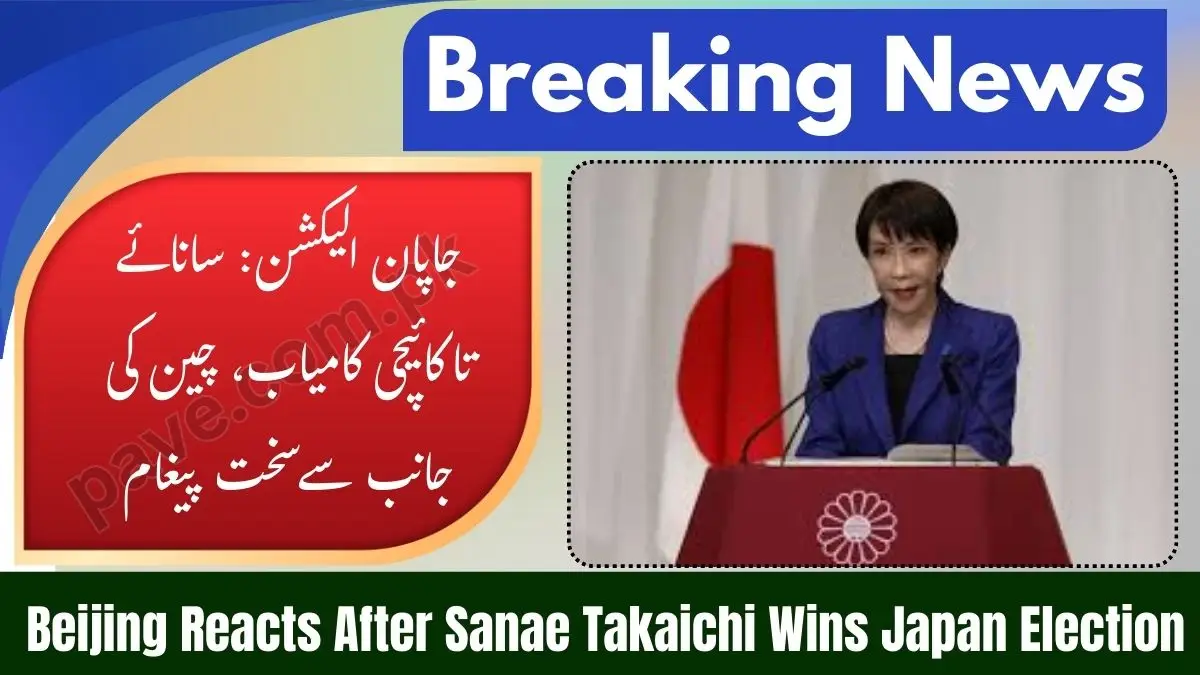
Japan has entered a new political era. In a snap general election held on February 8, 2026, Sanae Takaichi led the Liberal Democratic Party (LDP) to a sweeping landslide, cementing her position as Japan’s first female prime minister and one of the most powerful leaders the country has seen since World War II.
The victory delivered a rare super-majority—and it immediately triggered a diplomatic storm. Beijing responded with unusually blunt language, warning of a “resolute response” to what it called any “reckless” actions by Tokyo’s new government.
Here’s the full picture: what the election results mean, why China is alarmed, and what to watch next.
The Election Result: A Super-Majority Mandate
Official results confirmed on February 10, 2026 show that Takaichi’s decision to call an early election paid off handsomely.
- LDP seats: 316 of 465 in the Lower House, clearing the two-thirds super-majority threshold (310).
- Ruling bloc: With its new coalition partner, the Japan Innovation Party (JIP), the government controls 352 seats.
- Why it matters: This dominance allows the government to override the Upper House and pursue constitutional changes that have been politically out of reach for decades.
In practical terms, Takaichi now has the numbers to advance her signature agenda—especially on defense and constitutional reform—without relying on fragile compromises.

Why Beijing Is Issuing a “Resolute Response” Warning
China’s reaction has been swift and sharp, reflecting deep concern about Takaichi’s foreign-policy stance and past remarks on Taiwan.
The Taiwan Flashpoint
In November 2025, Takaichi said a Chinese attack on Taiwan could constitute an “existential crisis” for Japan—language that implies possible Japanese military involvement alongside allies. For Beijing, this crosses a red line.
China’s Official Message
On February 9, 2026, Chinese Foreign Ministry spokesperson Lin Jian warned that if “far-right forces in Japan misjudge the situation and act recklessly,” they will face a “resolute response from the international community.” Beijing has repeatedly urged Takaichi to retract what it calls “erroneous remarks” on Taiwan and to adhere to the longstanding political understandings underpinning Sino-Japanese ties.

A Relationship at a Decades-Low Point
Tensions did not begin with the election; they have been building through 2025 and into 2026.
- Trade pressure: China has reportedly tightened exports of rare-earth materials vital to Japan’s electronics and defense sectors.
- Military brinkmanship: In December 2025, Chinese aircraft reportedly locked radar onto Japanese jets, prompting a diplomatic standoff.
- Symbolism matters: The return of the last two pandas from Tokyo to China ended 50 years of “panda diplomacy,” a telling signal of how cold relations have become.

Takaichi’s “Japan First” Agenda at a Glance
| Policy Area | Core Objective |
|---|---|
| Defense | Raise spending to 2% of GDP or higher; expand counter-strike capabilities |
| Constitution | Amend Article 9 to explicitly recognize the Self-Defense Forces |
| Economy | “Responsible but aggressive” fiscal policy; strategic innovation investment |
| Immigration | Tighter rules to protect national identity |
With a super-majority, these goals are no longer aspirational—they’re actionable.

What to Watch Next
- Formal re-election: Takaichi is expected to be confirmed prime minister in a special parliamentary session later this month.
- Washington talks: A high-profile summit with U.S. President Donald Trump is scheduled for March 19, 2026, where the leaders are expected to frame a “peace through strength” approach to regional security.
- Constitutional moves: Any concrete steps toward revising Article 9 will be closely watched across Asia—and will test Beijing’s warnings.
Bottom Line
Sanae Takaichi’s landslide has reshaped Japan’s political calculus overnight. At home, she now commands the numbers to pursue long-held goals on defense and the constitution. Abroad, that same mandate has raised alarms in Beijing and injected fresh volatility into an already tense region.