SBP Reveals Massive Growth in Mobile Banking Payments in Pakistan
Pakistan’s digital economy is growing fast, and the latest report from the State Bank of Pakistan (SBP) shows a major shift in how people are making payments. According to the Quarterly Payment Systems Review (FY26), most digital transactions in the country are now being done through mobile banking apps.
This trend highlights how smartphones and digital wallets are changing everyday financial activities across Pakistan.
Mobile Banking Apps Dominate Digital Payments
The report reveals that:
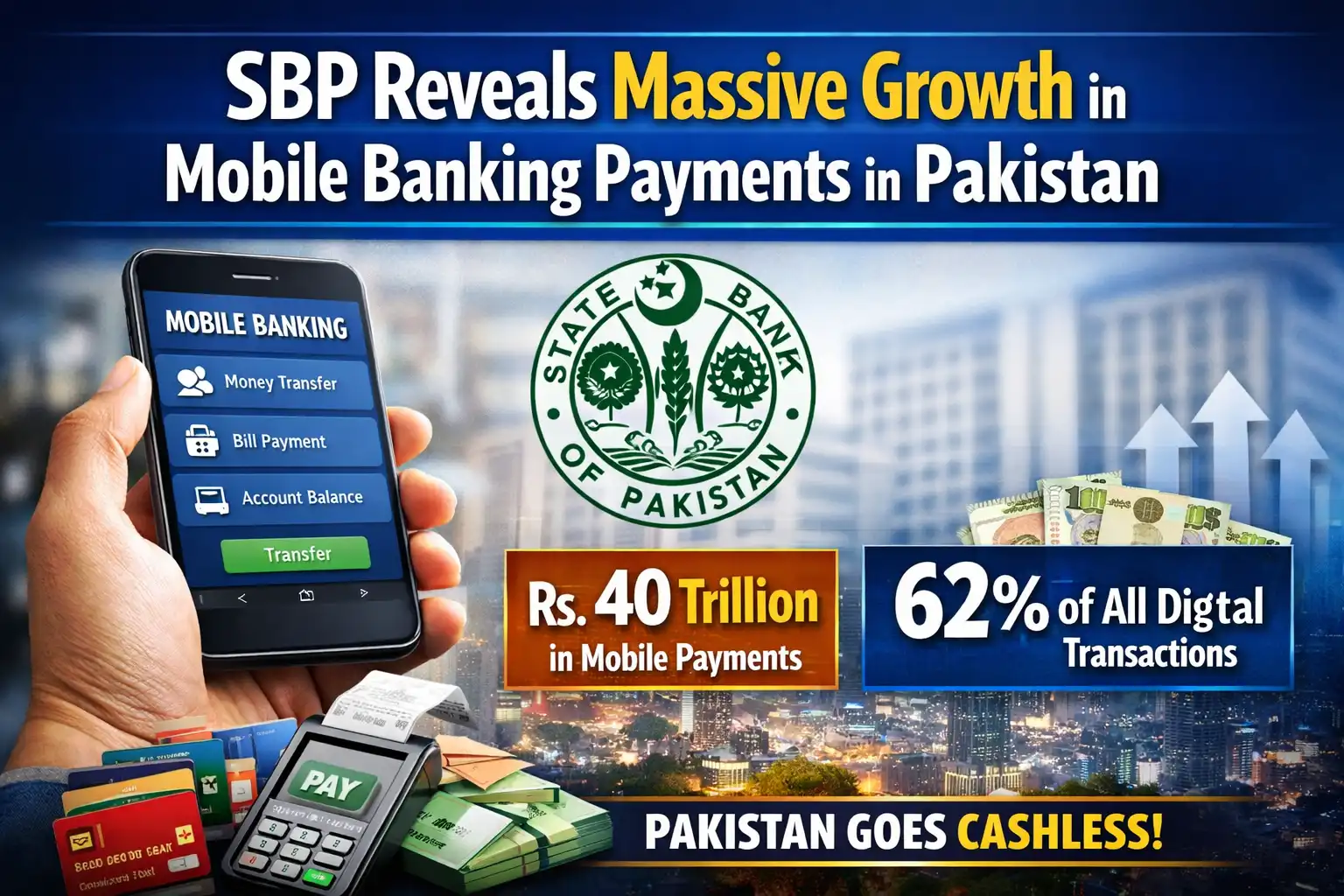
- 2.6 billion transactions were made through mobile apps
- These transactions were worth Rs. 40 trillion
- Mobile app payments accounted for 62% of all digital transactions
This clearly shows that mobile banking apps have become the most preferred payment method in Pakistan.

What Services Are People Using Apps For?
Mobile banking apps are being used for a wide range of services, including:
- Person-to-person (P2P) transfers
- Bill payments (electricity, gas, internet)
- Online shopping payments
- Retail store payments via QR or wallets
This convenience is one of the main reasons behind the rapid growth of digital payments.
Overall Digital Payments Growth in Pakistan
Digital payments in Pakistan are not just growing—they are expanding rapidly.
Key Highlights:
- Total digital transactions reached 3.1 billion
- Total value hit Rs. 64 trillion
This shows a strong shift toward a cashless economy in Pakistan.
Internet Banking Also Shows Growth
Apart from mobile apps, internet banking is also gaining popularity.
- Transaction volume increased by 11%
- Transaction value increased by 22%
This indicates that more users are trusting online banking platforms for financial activities.

Rise in Payment Cards Usage
The number of payment cards in Pakistan has also increased significantly.
Current Stats:
- Total cards: 66.7 million
- Debit cards: 87%
- Credit cards: 5%
Debit cards remain the most widely used option for everyday transactions.
Raast Payment System Continues Strong Performance
Pakistan’s instant payment system Raast is playing a key role in digital growth.
Raast Performance:
- 645.7 million transactions processed
- Total value: Rs. 18.5 trillion
Breakdown:
- P2P transactions:
- 603 million
- Rs. 15.7 trillion
- P2M transactions:
- 33.6 million
- Rs. 167.6 billion
Raast is becoming one of the most important platforms for instant and free money transfers in Pakistan.
ATM and Banking Network Activity
Even with digital growth, traditional banking channels are still active.
ATM Usage:
- 20,976 ATMs across Pakistan
- 277 million transactions
- Total value: Rs. 4.9 trillion
Branch & Agent Services:
- 20,143 bank branches
- 763,262 banking agents
Transactions:
- Bank branches:
- 138 million transactions
- Rs. 102 trillion
- Banking agents:
- 135 million transactions
- Rs. 0.9 trillion
This shows that both digital and traditional systems are working together.
Growth in Card-Based and E-Commerce Payments
Card payments and online shopping are also increasing.
- Around 1.7 million card transactions per day
- Growth in POS machines and e-commerce platforms
This indicates a rise in online shopping trends in Pakistan.
Why Digital Payments Are Growing in Pakistan
Several factors are driving this growth:
- Increased smartphone usage
- Better internet access
- Government support for digital finance
- Easy-to-use banking apps
- Rise of fintech companies
People now prefer fast, secure, and cashless transactions.
What This Means for the Future
Pakistan is moving steadily toward a digital financial system.
Expected Trends:
- More adoption of mobile wallets
- Expansion of Raast system
- Growth in fintech startups
- Reduced dependence on cash
This shift will improve:
- Financial inclusion
- Transparency
- Economic efficiency
Final Thoughts
The SBP report clearly shows that mobile banking apps are now leading Pakistan’s digital payment revolution. With billions of transactions and trillions in value, the country is quickly moving toward a modern, cashless economy.
As technology continues to improve, digital payments will become even more common in everyday life.