Breaking: Shehbaz Sharif Launches Austerity Plan to Save Economy
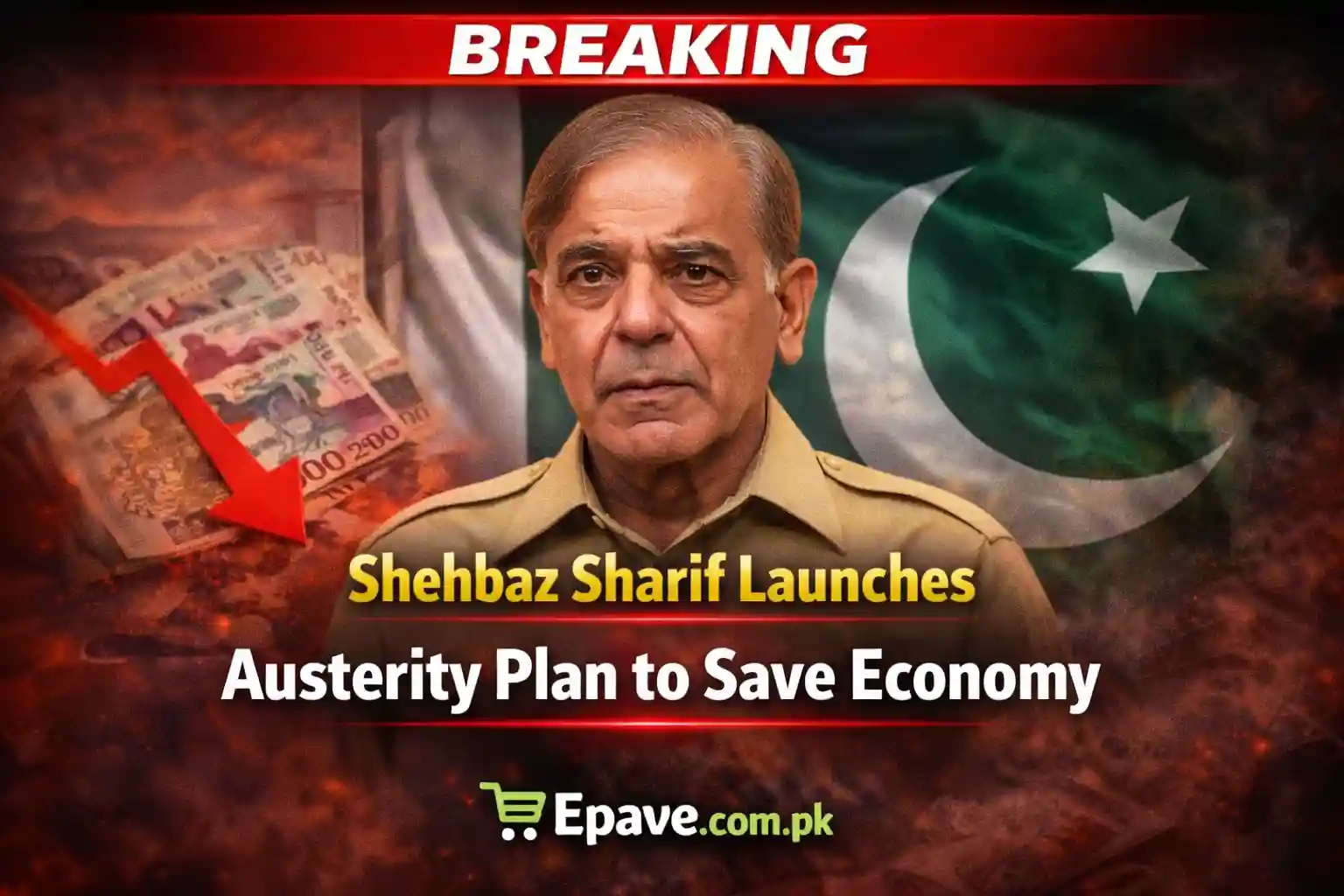
Prime Minister Shehbaz Sharif has officially launched a nationwide Austerity and Economic Stability Plan on March 9, 2026, aimed at stabilizing Pakistan’s economy amid rising global oil prices and regional tensions in the Middle East.
The announcement follows a historic Rs55 per liter increase in petrol and diesel prices, one of the largest fuel price hikes in the country’s history. The government says the economic shock was triggered by escalating tensions related to the US Israel Iran conflict, which has disrupted global energy markets and increased the cost of petroleum imports for Pakistan.
The new austerity strategy focuses on reducing government expenditures, conserving fuel resources, protecting essential industries, and preparing contingency plans in case the energy crisis worsens.
Why Pakistan Introduced the Austerity Plan
The Shehbaz Sharif austerity plan comes as Pakistan faces growing economic pressure from global oil price fluctuations. Officials say the ongoing Middle East conflict has already begun affecting international energy supply routes.
According to government estimates, Pakistan’s monthly oil import bill could rise to nearly 600 million dollars, putting additional pressure on the national economy.
To address these challenges, the government has introduced strict financial discipline measures while ensuring that essential sectors such as agriculture and industry continue operating normally.
Mandatory Austerity Measures for Government Officials
The Prime Minister has issued clear instructions to all federal ministers, elected representatives, and senior government officials to adopt strict austerity policies.
Key Government Austerity Measures
- Ministers and officials must follow a policy of simplicity and austerity in official conduct.
- Government departments must eliminate unnecessary expenditures.
- Public funds should be redirected toward economic stability and public relief programs.
- The elite and privileged segments of society are expected to lead by example.
Prime Minister Shehbaz Sharif emphasized that responsible use of national resources is essential during times of economic pressure.
Fuel Conservation Strategy Introduced by Government
As part of the Pakistan fuel crisis management strategy, the government has announced strict monitoring of petroleum supply and usage.
Major Fuel Conservation Measures
- Strict action against petrol hoarding and artificial shortages.
- Immediate cancellation of licenses for petrol pumps involved in illegal fuel storage.
- Launch of a Real Time Digital Monitoring Dashboard by the Ministry of IT.
- Nationwide monitoring of petroleum demand and supply across provinces.
However, the government confirmed that industrial and agricultural sectors will remain exempt from fuel restrictions to protect exports and food production.

Work From Home and Distance Learning Contingency Plan
The government has also prepared a contingency plan to reduce fuel consumption if the crisis intensifies.
Possible Emergency Measures
- Schools may temporarily shift to online distance learning.
- Offices may implement work from home schedules.
- Government and private sectors may adopt rotational office attendance.
Prime Minister Shehbaz Sharif clarified that these measures are not currently active and will only be implemented if the fuel crisis worsens.
Officials will review the situation on a weekly basis before taking any further steps.

Pakistan’s Fuel Reserves and Supply Strategy
The government has assured the public that Pakistan currently has adequate petrol and diesel reserves to handle immediate demand.
At the same time, officials are actively working to secure additional energy supplies from friendly countries.
Alternative Fuel Supply Strategy
Pakistan is currently in diplomatic contact with:
- Saudi Arabia
- United Arab Emirates
- Oman
The objective is to secure alternative petroleum supply routes that can reduce dependency on unstable shipping routes such as the Strait of Hormuz.
The government also plans to approach the International Monetary Fund (IMF) for temporary relief related to petroleum levy taxes to reduce pressure on consumers.
Impact of Petrol Price Increase on the Public
The government’s economic measures come after the Rs55 per liter petrol price increase, which has affected transportation costs, household budgets, and inflation expectations.
Below is a summary of the current situation.
| Measure | Status |
|---|---|
| Petrol and Diesel Prices | Increased by Rs55 per liter |
| Government Spending | Strict austerity and spending cuts |
| Schools and Offices | Open for now, contingency plan ready |
| Public Transport | Monitoring to prevent illegal fare hikes |
Authorities have also warned transport operators against unfair fare increases.
Government Meetings and Economic Planning
Prime Minister Shehbaz Sharif chaired a high level meeting in Islamabad to finalize the austerity plan.
The meeting included several senior officials such as:
- Deputy Prime Minister Ishaq Dar
- Finance Minister Muhammad Aurangzeb
- Planning Minister Ahsan Iqbal
- Petroleum Minister Ali Pervaiz Malik
- Power Minister Awais Leghari
Provincial chief ministers and secretaries also participated in discussions regarding fuel conservation and economic stability.
Fuel Shipments Expected to Strengthen Supply
Petroleum Minister Ali Pervaiz Malik confirmed that three major petroleum shipments are expected to arrive in Pakistan soon.
These shipments are expected to stabilize fuel availability and prevent any immediate shortages caused by global disruptions.
Officials also reassured provincial governments that diesel supply for agricultural use will remain uninterrupted, particularly during critical farming seasons.
Shehbaz Sharif’s Message to the Nation
Prime Minister Shehbaz Sharif urged citizens and government officials to adopt responsible energy consumption practices.
He stated that during challenging economic periods, every segment of society must contribute to national stability.
The Prime Minister also emphasized that once global conditions improve, the government will shift its focus toward maximum public relief and economic recovery programs.
Conclusion
The Shehbaz Sharif austerity plan represents a major step toward managing Pakistan’s economic challenges during a period of global uncertainty. With rising fuel prices and geopolitical tensions affecting energy markets, the government has introduced strict spending controls, fuel conservation strategies, and contingency planning.
While the immediate focus remains on stabilizing the economy and protecting fuel supplies, officials have assured the public that the government is working actively to reduce financial pressure on citizens and ensure long term economic stability.