
Transporters Launch Province-Wide Strike Across Punjab
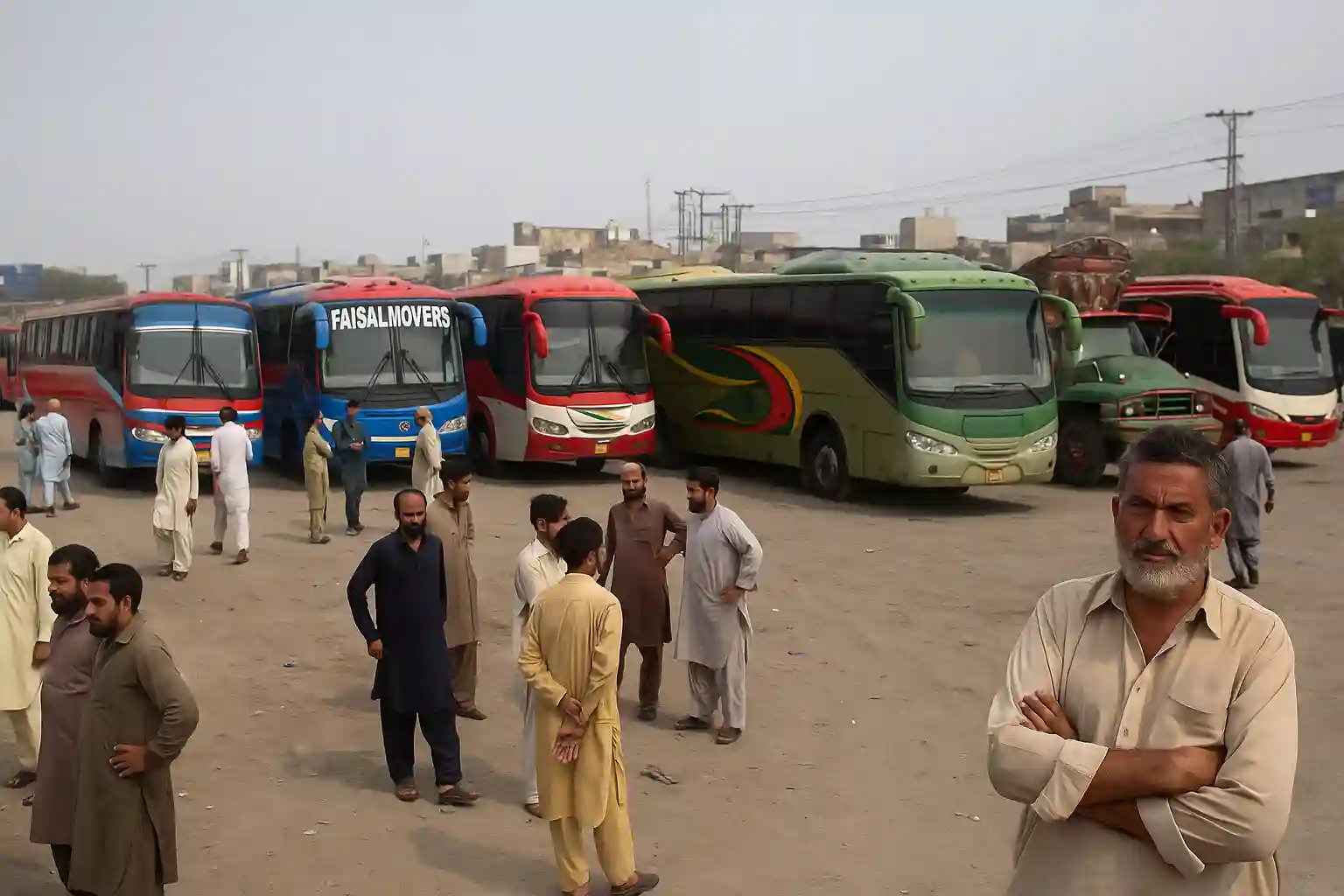
Punjab witnessed a complete shutdown of transport services on Monday as transporters announced a province-wide wheel-jam strike against the newly introduced Traffic Ordinance 2025. The strike caused major disruption across cities, highways, and inter-district routes, leaving thousands of passengers stranded at bus terminals and on roadsides.
Transport unions said they were left with “no other option” after the government refused to withdraw the ordinance, which includes strict penalties, heavy fines, and strong enforcement measures for traffic violations.
The strike rapidly gained momentum as public transport, goods carriers, rickshaws, minibuses, and loaders all joined the protest, bringing Punjab’s transport system to a halt.
Transporters Reject Traffic Ordinance 2025
During a press conference in Lahore, leaders of the Pakistan Transport United Action Committee openly rejected the Traffic Ordinance 2025. They said the government had introduced the law without consulting transport stakeholders, adding that the new fines were “unfair, unrealistic, and impossible to pay.”
Transport leaders said that drivers were already burdened by fuel prices, rising inflation, and day-to-day expenses, and now the government wanted to impose heavy penalties that could push many out of work.
They demanded the immediate withdrawal of the ordinance, warning that the strike would continue indefinitely if the government failed to respond.

Public Transport Suspended Across Major Cities
Across Punjab — including Lahore, Rawalpindi, Faisalabad, Gujranwala, Multan, Sargodha, Bahawalpur, and DG Khan — transport terminals remained empty as buses stayed parked. Rickshaws and vans also stopped running, causing severe inconvenience for students, workers, and labourers.
Passengers were seen waiting for hours, with no transport available. Ride-hailing services also increased fares due to limited supply, further adding to the public’s frustration.
Many commuters complained that they were not informed about the strike beforehand, leaving them stranded.
Market activity was also affected as goods transport stopped, delaying deliveries and affecting supply chains across industrial areas and wholesale markets.

Goods Transporters Also Join the Strike
The participation of goods transporters added extra pressure on the provincial economy. Hundreds of trucks, containers, and delivery vehicles remained off the highways, disrupting shipments moving between Punjab, Sindh, Khyber Pakhtunkhwa, and Balochistan.
Industrialists warned that if the strike continued, factories might face shortages of raw materials, while retailers could see increased prices due to delayed supplies.
Transport leaders said they were ready to extend the protest for as long as necessary unless the ordinance was rolled back.

Negotiations With Government Fail to Bring Breakthrough
The Punjab government held the first round of talks with the transport unions late Sunday night, but discussions ended without any agreement.
Transport associations claim the government offered “verbal assurances” but refused to commit to revising or suspending the Traffic Ordinance 2025.
A second round of talks is scheduled for 2 p.m. today, and unions say they will decide future steps based on the outcome.
However, transporters warned that if the government does not show flexibility, the strike could expand further.

Punjab IG Strongly Criticizes the Strike
Punjab Inspector General of Police Dr. Usman Anwar strongly condemned the strike, calling it an attempt to pressure the government. He said the government would not bow to “blackmailing tactics.”
The IG said driving without a license is a serious offence and leads to countless road accidents each year. According to him, the Traffic Ordinance 2025 aims to save lives by enforcing stricter rules.
He added that in “civilised countries,” citizens follow laws instead of protesting against them.
Calling unlicensed driving a “license to kill,” Dr. Anwar said the government would ensure full enforcement of traffic rules, regardless of the strike.
Public Faces Hardship and Increasing Travel Costs
The wheel-jam strike created severe difficulties for the public. With no buses or rickshaws available, people walked long distances or paid high fares for limited private transport options.
Students missed classes, office workers arrived late, and many labourers lost their daily wages due to lack of transport.
Parents complained about difficulties in taking children to schools, while patients heading to hospitals also suffered due to transport shortages.
Small businesses and markets reported reduced footfall as customers were unable to travel.
Strike May Continue If Talks Fail
Transport unions say they will wait for the outcome of today’s meeting before announcing their next move. If the government refuses to withdraw the ordinance, the protest may continue into the week.
Many transporters argue that they support road safety measures but want reasonable fines and consultation before implementing new laws.
On the other hand, the government appears firm on enforcing traffic regulations to reduce accidents.
Conclusion – Transporters Launch Province-Wide Strike Across Punjab
The province-wide strike has brought Punjab’s transport system to a standstill, creating widespread disruption for commuters, businesses, and industries. With both sides sticking to their positions, the situation remains tense.
The next round of talks will determine whether transport operations resume or the crisis deepens further in the coming days.