
Used Cars Import Surge Threatens Pakistan’s Auto Industry Future – Full Analysis 2025
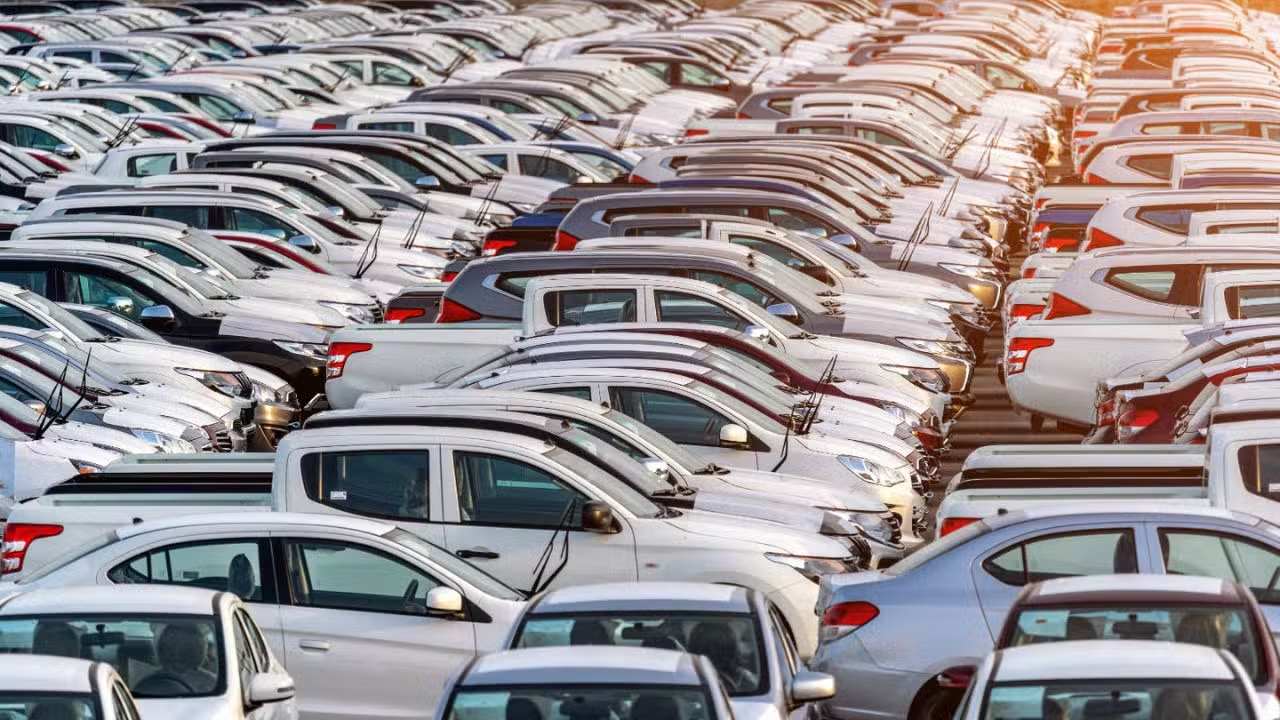
Pakistan’s automobile industry is one of the biggest contributors to the national economy. It supports millions of jobs, brings in foreign investment, and drives industrial growth. However, the recent rise in used-car imports has created serious concerns for the future of Pakistan’s auto sector. Industry experts warn that if the government continues to relax policies for used vehicles, Pakistan could face long-term economic losses, job cuts, and a decline in local manufacturing capacity.
This detailed article explains the impact of used-car imports, industry challenges, government policies, IMF commitments, market data, and recommendations from stakeholders, in simple and clear English.
1. Importance of Pakistan’s Automobile Industry
Pakistan’s auto sector is considered one of the strongest pillars of the economy.
1.1 Contribution to GDP & Jobs
- Contributes almost 2% to Pakistan’s GDP
- Provides 2.5 million direct jobs
- Supports 5 million livelihoods through dealerships, vendors & suppliers
- More than 300+ local vendors supply automotive parts
- Over $5 billion in foreign direct investment (FDI) received over two decades
The sector is deeply connected to economic stability. Any disturbance impacts employment, income, and manufacturing growth.
2. Financial Contribution to National Revenue
In FY25:
- Auto industry contributed around Rs 700 billion to the national exchequer
- This was nearly 6% of the federal government’s total revenue
- Localization efforts save $150 million annually by reducing imports
Despite these contributions, the industry now fears major disruption due to government decisions.
3. Why the Government Is Supporting Used-Car Imports
Pakistan is facing:
- high inflation
- low tax collection
- IMF-mandated revenue targets
- severe fiscal pressure
- economic slowdown
- post-flood financial challenges
Under IMF commitments, Pakistan must:
- Achieve 3.5% GDP growth
- Raise tax-to-GDP ratio to 11%
- Meet the tough tax-collection target of Rs 13.981 trillion
To achieve these goals, the government is easing used-car imports, because:
- It quickly increases customs revenue
- Imported cars generate immediate taxes at the port
- It reduces public pressure for cheaper car options
But this short-term solution may destroy long-term industry stability.
4. Impact of Used-Car Imports on Local Manufacturing
Industry data shows:
- First 8 months of FY24 saw Rs 45 billion revenue loss for local manufacturers
- Many companies reduced production shifts
- Several delayed new investments
- Some companies considered layoffs
- Vendors supplying parts faced reduced orders
- Local assembly volumes dropped significantly
When used-car imports increase, demand for locally made cars falls, causing:
- plant shutdowns
- loss of localization
- decline in vendor businesses
- reduced tax collection in the long run
- collapse of future investments
5. Historical Background: Pakistan’s Automotive Journey
Pakistan’s auto sector journey started in the early 1980s when the first major assembly plant was set up in Karachi.

5.1 Localization Promise
The company agreed to:
- Import CKD (Complete Knocked Down Kits)
- Gradually increase local parts manufacturing
This helped create:
- hundreds of auto part manufacturers
- skilled labor
- local engineering capabilities
But repeated policy changes and sudden import relaxations stopped Pakistan from achieving full localization.
Read Also: Breaking News: NADRA Launches Online Biometric Verification for Islamabad Vehicle Transfers

5.2 Result of Policy Instability
- Pakistan became a major market for used imported cars
- Local producers could not reach the economies of scale
- New investors hesitated to enter the market
- Parts manufacturers struggled to survive
The same cycle is repeating today.
6. Industry Warnings: Long-Term Consequences
According to industry experts, increased used-car imports may cause:
6.1 Job Losses
- Plant shutdowns
- Vendor closures
- Reduced dealership networks
6.2 Decline in Local Production
- Local manufacturers lose market share
- New model launches get delayed
- Research and development stops
6.3 Investor Uncertainty
- Local and foreign investors may withdraw
- FDI inflows can reduce significantly
6.4 Weakening of Industrial Base
- Pakistan may return to being a fully import-based market
- Loss of engineering capability
- Auto parts manufacturing industry may collapse
6.5 Supply Chain Disruption
- Over 300 localized vendors face financial pressure
- Thousands of small workshops may shut down
- Prices of locally made parts may increase
The industry fears that these consequences will hurt Pakistan’s economy for decades.
Read Also: Breaking News: NADRA Launches Online Biometric Verification for Islamabad Vehicle Transfers
7. Short-Term Revenue vs Long-Term Stability
The government argues:
- Used-car imports bring immediate tax revenue
- Imported cars provide cheaper options to middle-income buyers
- Relaxed import policies reduce market shortages
However, the industry says:
- Immediate tax revenue is temporary
- Long-term losses are far greater
- Local manufacturing must be the priority
A stable policy can help Pakistan become a vehicle exporter like:
- Thailand
- Indonesia
- Turkey
- India
8. Upcoming Auto Policy 2026–31: What the Industry Wants
As Pakistan prepares the Auto Policy 2026–31, industry leaders suggest:
Read Also: Breaking News: NADRA Launches Online Biometric Verification for Islamabad Vehicle Transfers
8.1 Strengthen Tax Administration
- Reduce under-invoicing
- Stop misuse of used-car import schemes
- Ensure transparent valuation
8.2 Close Revenue Leakages
- Prevent manipulation of import categories
- Improve customs monitoring
8.3 Support Local Production
- Provide incentives for localization
- Encourage electric vehicle (EV) manufacturing
- Facilitate new auto investors
8.4 Ensure Policy Stability
- No sudden tariff changes
- 5–7 year fixed roadmap
- Predictability for investors
If these changes are made, Pakistan can grow the auto sector and expand exports.
9. The Broader Economic Impact
Pakistan’s long-term economic goals include:
- sustainable growth
- industrial expansion
- job creation
- export diversification
The auto industry is crucial for all these areas.
If the sector collapses due to used-car imports:
- unemployment will rise
- revenue will drop
- foreign investment will decline
- Pakistan will remain import-dependent
- industrial output will fall
Experts believe that the government should balance public needs with industrial stability.
Read Also: Breaking News: NADRA Launches Online Biometric Verification for Islamabad Vehicle Transfers
10. Conclusion
The surge in used-car imports is a serious challenge for Pakistan’s automobile sector. While the government is trying to increase revenue under IMF pressure, industry experts warn that this approach may damage local manufacturing, reduce jobs, and discourage investment.
Pakistan needs a balanced, stable, and long-term auto policy that protects local industry, supports jobs, encourages localization, and helps the country move toward becoming an exporter instead of an import-dependent market.
Only with a strong domestic automotive base can Pakistan achieve sustainable economic growth.

Frequently Asked Questions (FAQs)
1. Why is Pakistan importing more used cars?
Because the government wants quick revenue through customs duties and taxes.
2. How do used-car imports affect local manufacturers?
They reduce sales, production, and investments of local companies.
3. How much revenue loss did the auto industry face?
Around Rs 45 billion in FY24 due to used-car imports.
4. What does the auto industry want from the government?
Stable policies, fewer import relaxations, and support for local manufacturing.
5. What is the risk of continued used-car imports?
Job losses, reduced investments, and long-term damage to the local auto industry.