Will Punjab Allow Basant Again in 2027? Maryam Aurangzeb Announcement Explained
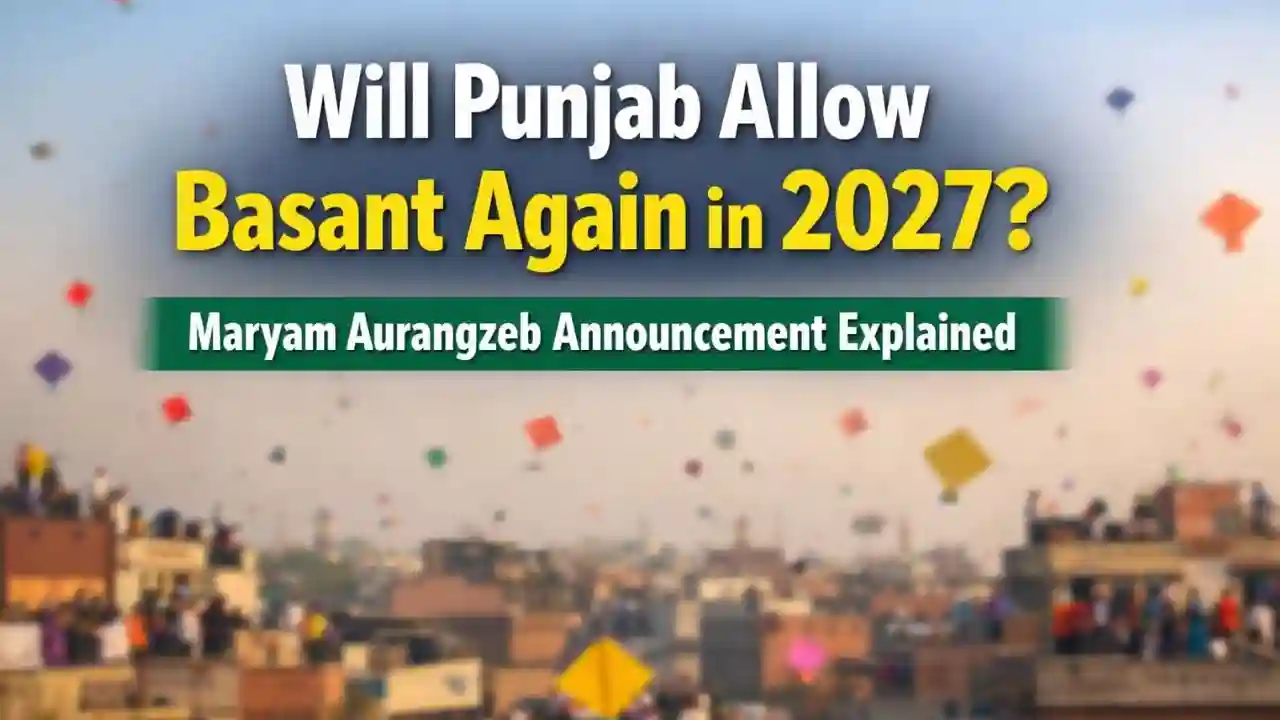
Will Punjab Allow Basant Again in 2027 has once again sparked debate across Pakistan, especially in Lahore where the colorful kite-flying festival holds deep cultural significance. Over the years, Basant has remained controversial due to safety concerns, legal bans, and political sensitivity. Recently, comments and clarifications attributed to Maryam Aurangzeb have reignited public interest, leading many to wonder whether Punjab is finally preparing to revive the historic festival in a regulated form.
This article explains the Maryam Aurangzeb announcement, the historical background of the Basant ban, current government stance, legal hurdles, and the realistic chances of Basant returning in Punjab in 2027.
What Is Basant and Why Does It Matter in Punjab?
Basant is a centuries-old spring festival traditionally celebrated in Lahore and other parts of Punjab. It marks the arrival of spring and is best known for:
- Kite flying on rooftops
- Yellow attire and food
- Music, poetry, and cultural gatherings
- Tourism and economic activity
Before its ban, Basant attracted thousands of local and international tourists, contributing significantly to Punjab’s hospitality, transport, and small business sectors.

Why Was Basant Banned in Punjab?
The Basant festival was officially banned due to serious safety and law-and-order concerns, including:
- Fatal accidents caused by chemical and metallic kite strings
- Injuries to motorcyclists and pedestrians
- Power outages due to kite strings damaging electricity lines
- Weak enforcement of safety regulations
Despite multiple attempts to regulate the festival, authorities struggled to control illegal materials, eventually leading to a complete ban.

Maryam Aurangzeb Announcement Explained
Recently, public discussion intensified after Maryam Aurangzeb, a senior leader of the Pakistan Muslim League (N), addressed questions related to cultural festivals and public safety. Her statements were widely shared on social media, with many interpreting them as a possible softening of the government’s stance on Basant.
What She Actually Clarified
- No official notification has been issued allowing Basant
- Public safety remains the top priority
- Any future decision would require legal, administrative, and safety guarantees
- Cultural revival must align with modern safety standards
Importantly, she did not announce a confirmed date or approval for Basant in 2027. Instead, she emphasized responsible policymaking rather than emotional decisions.

Will Punjab Allow Basant Again in 2027?
As of now, Punjab has not officially approved Basant for 2027. However, several indicators suggest the topic is under serious internal discussion:
Factors Supporting a Possible Revival
- Growing public demand, especially from Lahore
- Pressure from tourism and business sectors
- Availability of safer kite materials
- Examples of regulated festivals in other countries
Major Obstacles Still in Place
- Supreme Court observations on safety
- Enforcement challenges at city scale
- Risk of illegal chemical strings returning
- Political accountability in case of accidents
Without a comprehensive regulatory framework, full revival remains unlikely.

What Would Be Required to Legally Allow Basant?
For Basant to return in Punjab, especially in 2027, the government would need:
- New Legislation
Clear laws regulating kite materials, sizes, and flying zones - Strict Enforcement Mechanism
Real-time monitoring, heavy fines, and fast trials - Designated Kite-Flying Areas
Open grounds instead of residential rooftops - Certified Kite Manufacturing
Licensed factories producing non-metallic strings - Public Awareness Campaigns
Educating citizens about safety and legal consequences
Without these steps, any approval would be legally risky.
Political Sensitivity Around Basant
Basant is not just a cultural issue—it is a politically sensitive subject in Punjab. Past governments faced heavy criticism after accidents, making leaders cautious.
Maryam Aurangzeb’s careful wording reflects this reality:
- Avoiding emotional promises
- Stressing responsibility and safety
- Keeping expectations realistic
This suggests that if Basant returns, it would likely be pilot-based or heavily restricted, not a full-scale citywide celebration.
Public Reaction and Social Media Debate
Social media platforms have been flooded with mixed reactions:
- Supporters argue that technology can make Basant safe
- Critics fear history will repeat itself
- Families of past victims strongly oppose revival
- Youth groups advocate controlled celebrations
The divided public opinion makes government decision-making even more complex.
Economic Impact If Basant Is Allowed Again
If safely regulated, Basant could:
- Boost tourism in Lahore
- Create seasonal employment
- Support small vendors and craftsmen
- Enhance Punjab’s cultural image globally
However, one major incident could reverse all gains instantly.
Most Realistic Scenario for 2027
Based on current signals, the most realistic outcome is:
- No full revival across Punjab
- Possible limited cultural events without kite flying
- Pilot projects under strict supervision
- Continued ban on rooftop kite flying
A complete green signal before airtight safety mechanisms is unlikely.
Frequently Asked Questions (FAQs)
Is Basant officially allowed in Punjab right now?
No. Basant remains banned, and no official notification has been issued allowing it.
Did Maryam Aurangzeb announce Basant’s return in 2027?
No. She clarified the government’s position but made no formal announcement approving Basant.
Can Basant be celebrated safely?
Experts believe it is possible only with strict regulation, enforcement, and modern safety standards.
Why is Basant so controversial?
Due to past fatalities, injuries, and inability to control illegal kite strings.
Will kite flying ever be allowed again in Lahore?
Only if new laws, enforcement systems, and designated zones are approved by authorities.
Is the Punjab government discussing Basant internally?
Yes, discussions exist, but no final decision has been announced.
Final Verdict
So, will Punjab allow Basant again in 2027?
The honest answer is: not yet, and not without major reforms.
Maryam Aurangzeb’s statements reflect caution, responsibility, and awareness of past tragedies. While cultural revival is important, public safety remains non-negotiable. Unless Punjab introduces foolproof legal and enforcement mechanisms, Basant’s full return in 2027 remains uncertain.