World Bank to Fund New Govt Digital Public Services Platform
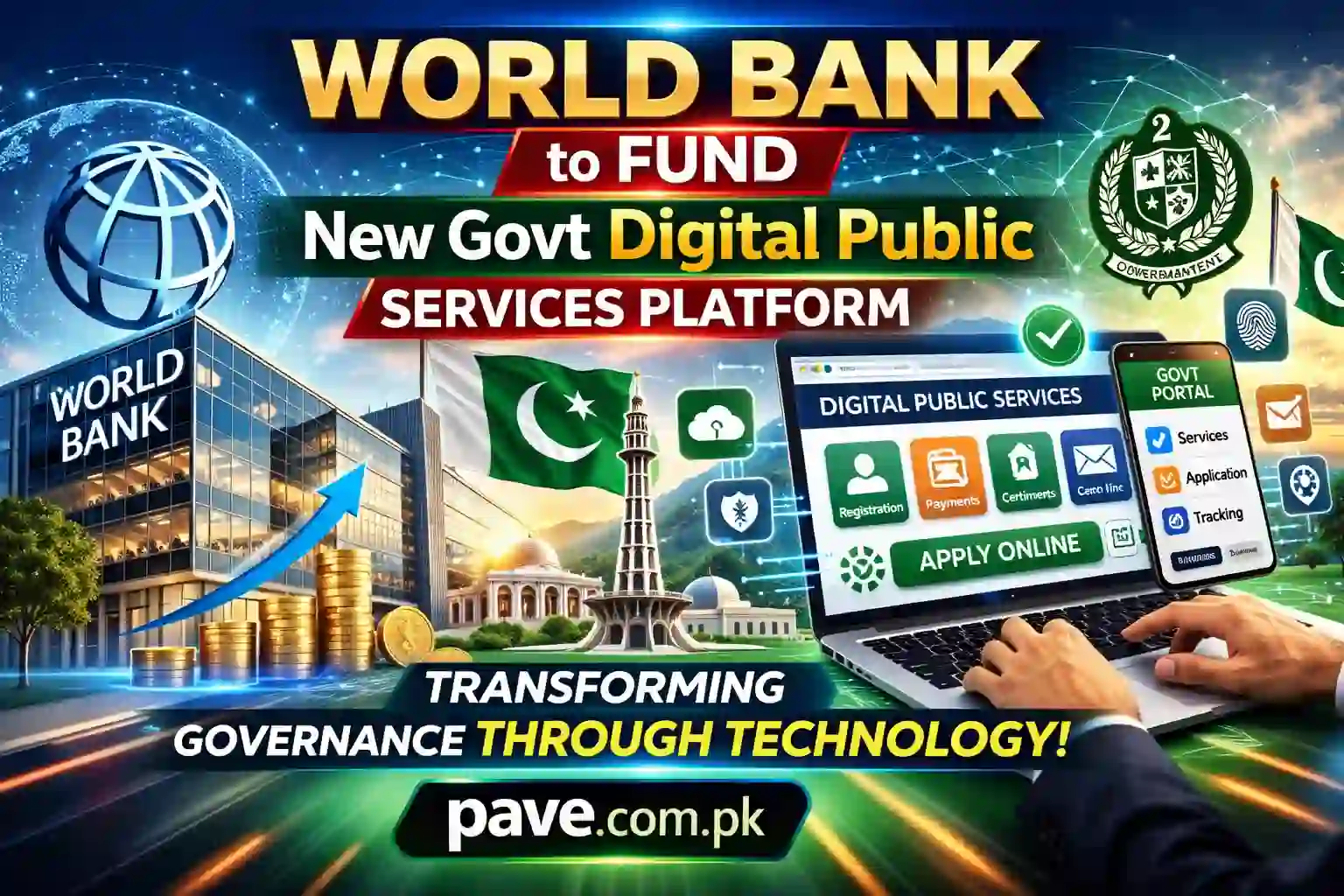
In 2026, the World Bank has scaled up its support for Pakistan’s digital shift through the Digital Economy Enhancement Project (DEEP), a $78 million initiative focused on modernizing public services, improving business regulation, and strengthening cybersecurity infrastructure.
This is not just a tech upgrade. It is a structural shift in how the state interacts with citizens, companies, and institutions.
Below is a detailed breakdown of the platform, funding, strategic impact, and how it connects to broader global digital transformation trends.
1. Did the World Bank Give a Loan to Pakistan in 2026?
Yes. The $78 million financing under DEEP is part of the World Bank’s broader support framework for Pakistan’s digital governance reforms.
This funding builds upon earlier digital public sector programs initiated in 2022 and has now entered a full implementation phase in early 2026.
The objective is clear:
Move from fragmented paper-based systems to an integrated digital governance model.
2. The Core Vision: A “One-Window” Digital Government Platform
The centerpiece of DEEP is a unified digital public services portal.
Instead of visiting multiple offices for licenses, tax registration, land records, or certificates, citizens and businesses will access services through a centralized digital system.
Key Pillars:
A. Pakistan Business Portal
A streamlined regulatory gateway allowing businesses to:
- Apply for licenses
- Register companies
- Submit compliance documents
- Track application status online
The goal is to reduce red tape and improve Pakistan’s ranking in global ease-of-doing-business indicators.

B. Integrated Citizen Services
Digitizing high-impact public services such as:
- Land administration records
- Health documentation
- Educational degree verification
- Driving license services
- Tax registration

C. Digital Wallets & Digital Lockers
A secure system enabling citizens to:
- Store CNIC copies
- Save academic degrees
- Share verified documents digitally
- Avoid repeated physical submissions
This aligns with global best practices in digital identity ecosystems.
3. Funding Breakdown – Where the $78 Million Goes
Digital Infrastructure – $58 Million
The largest allocation is for building the National Data Exchange Layer (NDEL).
This infrastructure allows government departments such as:
- Federal Board of Revenue
- National Database and Registration Authority
- Provincial land and municipal departments
to securely exchange data in real time.
Impact:
- Reduced paperwork
- Automated verification
- Faster approvals
- Lower fraud risk
Business Regulatory Reform – $15 Million
Dedicated funding to operationalize the Pakistan Business Portal.
Target outcomes:
- Faster company incorporation
- Reduced licensing delays
- Transparent fee structures
- Lower compliance costs
Cybersecurity & Governance
With rising cyber threats globally, the program includes:
- National cybersecurity roadmap
- Government-wide data protection protocols
- Secure cloud infrastructure standards
- Risk monitoring systems
4. February 2026 Implementation Update
The project has now entered a coordination-heavy execution stage.
Provincial Integration
The Ministry of IT & Telecom is finalizing MoUs with provinces to integrate:
- Property transfer systems
- Motor vehicle databases
- Local licensing systems
Without provincial inclusion, the “one-window” model would remain incomplete.
AI Alignment
The DEEP project is being synchronized with Pakistan’s $1 billion National AI Ecosystem Development Program, aimed at:
- AI-powered complaint resolution
- Energy demand forecasting
- Fraud detection in welfare schemes
- Predictive tax compliance models
This signals a move beyond digitization toward intelligent automation.
5. Why This Matters – Structural Impact

A. Anti-Corruption Mechanism
Reducing in-person discretion reduces bribery risks.
Digital timestamps and audit trails create accountability.
B. Increased Tax Base
Digital transaction visibility:
- Improves compliance
- Reduces undocumented business activity
- Enhances revenue forecasting

C. Efficiency Gains
Government document processing times are projected to drop by over 50% once fully integrated.
6. Global Context – World Bank Digital Transformation Framework
The World Bank’s Digital Development agenda falls under:
Digital Development Global Practice
This unit supports countries in:
- Digital ID systems
- E-government transformation
- Broadband expansion
- Cyber resilience
7. World Bank Digital Economy Reports & Indexes
The Bank tracks global digital progress through:
Digital Adoption Index (DAI)
Measures digital adoption across:
- Government
- Business
- People
Pakistan’s improved infrastructure may positively impact future DAI rankings.
Digital Progress and Trends Reports
These analyze:
- Global digital transformation trends
- Emerging AI integration
- Cross-border data governance
- Digital finance expansion
8. Which Are the 5 Digital Banks in Pakistan? (2026 Snapshot)
Pakistan’s emerging digital banking ecosystem includes:
- JazzCash
- Easypaisa
- SadaPay
- NayaPay
- Ubank
Some operate as EMIs (Electronic Money Institutions) rather than full banks but function digitally.
9. Which Is the Best Digital Bank in the World?
Globally recognized leaders include:
- Revolut
- Nubank
- Monzo
“Best” depends on metrics such as:
- User growth
- Regulatory compliance
- Profitability
- Technology stack
- International expansion
10. How to Get Funding From the World Bank?
The World Bank does not fund individuals directly.
Funding is provided to:
- Governments
- Large public sector programs
- Infrastructure initiatives
If you are:
- A business → Explore IFC (International Finance Corporation) financing
- A researcher → Look into World Bank grants via institutional partnerships
- A government body → Apply through country partnership frameworks
11. Global Digital Transformation – The Bigger Picture
Worldwide trends include:
- 60%+ of public services digitized in advanced economies
- Rapid growth in digital identity systems
- AI integration in tax, health, and energy
- Expansion of open data platforms
Pakistan’s DEEP program places it within this global shift.
Strategic Outlook
If fully implemented, DEEP could:
- Improve investor confidence
- Strengthen institutional transparency
- Reduce administrative friction
- Increase digital financial inclusion